
Decomposition Cleanup
San Jose, CA
When biological decomposition has advanced into floors, walls, and structural materials, standard cleaning is not enough. HavenSafe Bio-Restoration coordinates experienced technicians across San Jose who specialize in the full scope of decomposition remediation — systematic material removal, structural decontamination, and permanent odor elimination.
HavenSafe Bio-Restoration is an independent referral and coordination service. Cleanup work is performed by licensed, vetted technicians in our professional network.
What Is Decomposition and Why Does It Require Specialized Cleanup?
Biological decomposition is the natural breakdown of organic matter after death. From a remediation standpoint, decomposition creates contamination that behaves fundamentally differently from blood or other fresh biological material — both in its physical properties and in how deeply it penetrates structures.
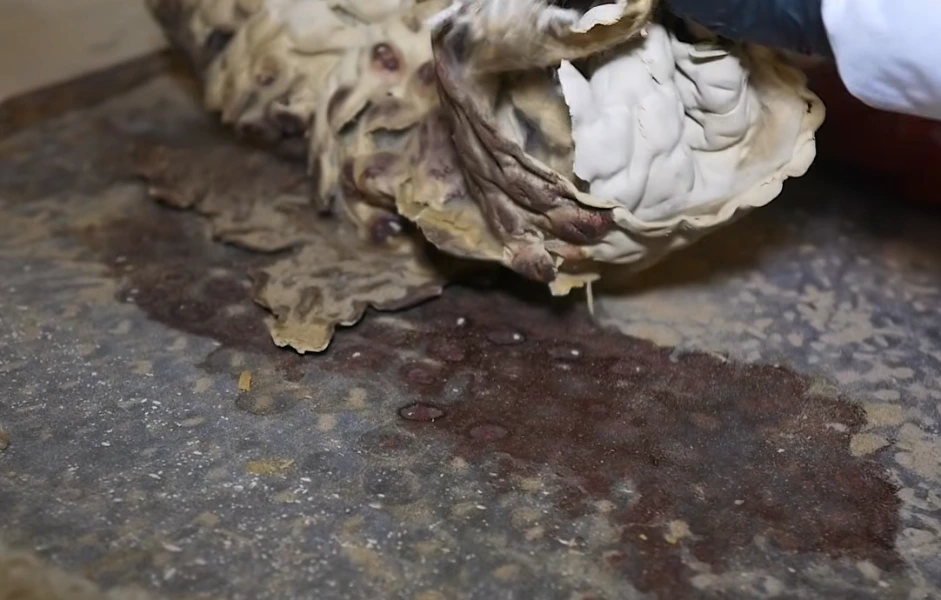
As decomposition progresses, the body's tissues liquefy and produce biological fluids rich in pathogenic microorganisms. These fluids flow outward from the body under gravity and are drawn by capillary action into every porous material they contact. Within days, biological contamination typically extends well beyond the visible stain area on the surface. Within weeks, it has usually penetrated subflooring, wall assemblies, and in some cases structural framing.
CalOSHA Title 8 CCR §5193 (Bloodborne Pathogens Standard) classifies these biological fluids as regulated by the bloodborne pathogen standard. Pathogens that can persist in decomposition fluid include HIV (which remains viable in fluid for days under certain conditions), Hepatitis B virus (which can remain infectious for over a week on dry surfaces), Hepatitis C virus, and a range of bacterial agents. California Health and Safety Code §118600 classifies the removed materials as regulated medical waste — they cannot be placed in ordinary trash and require manifested disposal through a licensed medical waste hauler.
San Jose's climate plays a significant role in how quickly decomposition advances. Interior temperatures in unair-conditioned homes in the South Bay during summer months can reach 90°F or higher, compressing the timeline of biological breakdown considerably. What might take weeks in a cool climate can occur in days during a San Jose summer — which means scenes discovered even a short time after death can present with more advanced decomposition than families or property managers expect.
How Decomposition Contamination Migrates Through a Structure
Understanding contamination depth is essential to scoping any decomposition scene correctly. What is visible on the surface is almost never the full picture.
| Material Layer | Typical Contamination Pattern | Remediation Approach |
|---|---|---|
| Carpet / Rugs | Absorbs immediately; saturation is nearly always complete at the site and extends outward | Full removal and disposal as regulated medical waste |
| Carpet Padding | Foam padding holds fluid and distributes it laterally, expanding the contamination footprint | Full removal; padding beneath tack strips requires careful extraction |
| Hardwood / Laminate Flooring | Fluid seeps between boards and planks into substrate; difficult to assess surface-only | Section removal to expose subfloor; moisture meter assessment before reinstallation |
| Subfloor (Plywood / OSB) | Highly porous; absorbs biological fluid extensively; often requires removal in advanced scenes | Section removal, structural decontamination, replacement with new sheathing |
| Concrete Slab (Sealed) | Surface contamination primary; migration into substrate limited if seal is intact | Surface decontamination; seal assessment; grout and expansion joint treatment |
| Concrete Slab (Unsealed / Cracked) | Fluid can migrate into the slab and underlying soil; more common in older San Jose construction | Surface removal, sub-slab assessment, possible soil treatment |
| Wall Cavities | Biological fluid can wick behind baseboards into wall assemblies; common in longer-interval scenes | Baseboard removal, wall opening, interior decontamination, drywall section replacement |
| Structural Framing (Joists / Studs) | Exposed framing absorbs fluid; contaminated framing is a persistent odor source if not treated | HEPA vacuuming, enzymatic treatment, encapsulation or replacement depending on saturation |
| Insulation | Absorbs biological fluid and odor compounds; cannot be decontaminated in place | Full removal and disposal as regulated medical waste |
| HVAC Ducting | Decomposition aerosols distribute through duct system if HVAC was running during the interval | Duct assessment; professional duct cleaning if contaminated; filter replacement |
Actual contamination depth varies by scene interval, ambient temperature, and construction type. A thorough on-site assessment — including moisture metering and ATP testing — is required to scope any decomposition scene accurately.
Our Decomposition Cleanup Process
Scene Assessment and Contamination Mapping
Before any work is authorized, our technicians perform a thorough on-site assessment. Using UV fluorescence equipment, moisture meters, and ATP bioluminescence testing, we map biological contamination to its full depth — including sub-surface and structural layers. We document our findings in photographs and a written assessment, and we provide you with a clear scope-of-work estimate before anything begins.
Controlled Deconstruction of Contaminated Materials
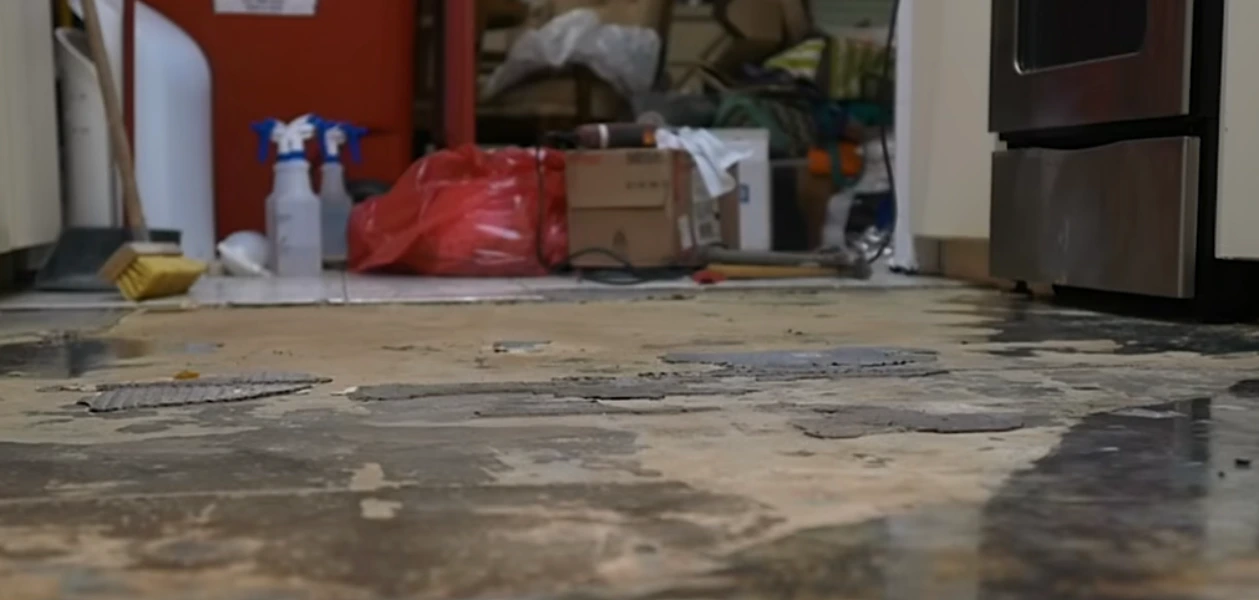
We systematically remove all contaminated porous materials: carpet, padding, flooring sections, affected drywall, insulation, and any other materials that have absorbed biological fluid. Where structural penetration has occurred, we open floors and walls as needed to reach uncontaminated material. Work is performed in controlled conditions — negative air pressure where needed — to prevent cross-contamination of unaffected areas of the property.
Regulated Medical Waste Disposal
All removed biological materials are classified, packaged in approved containers, labeled, and disposed of through a licensed California medical waste hauler under California Health and Safety Code §118600. You receive copies of the disposal manifests — documentation required for insurance claims, estate records, and property management compliance files.
Structural Surface Decontamination
All exposed structural surfaces — concrete, wood framing, metal — are cleaned with HEPA vacuuming and treated with hospital-grade EPA-registered disinfectants rated against bloodborne pathogens in compliance with CalOSHA §5193. We document every product, dilution, and dwell time. Post-treatment ATP testing confirms surfaces have reached safe clearance levels before the space is considered decontaminated.
Permanent Odor Neutralization
Once all contaminated material has been removed, we address residual odor compounds embedded in remaining structural materials. Depending on the extent of saturation, we use ozone generation (highly effective in evacuated spaces), hydroxyl radical treatment, or thermal fogging. These are not masking agents — they break down the volatile organic compounds causing the odor at the molecular level. The result is permanent elimination, not temporary suppression.
Clearance Testing and Restoration Documentation
Final ATP testing and a written post-remediation report confirm the space has been fully remediated. Where structural elements were removed, we can coordinate subfloor replacement, drywall patching, and cosmetic refinishing with qualified contractors to return the property to full livable condition. All documentation is delivered in a package suitable for insurance claims and property records.
Decomposition Cleanup in San Jose — Local Factors That Matter
San Jose presents a specific set of conditions that affect how decomposition scenes develop and how remediation should be approached. Understanding these local factors is part of what makes our technicians effective in this market.
Older Housing Stock and Construction Type
Many of San Jose's neighborhoods contain homes built in the 1950s, 1960s, and 1970s — before modern subfloor sheathing products and sealed concrete became standard. In Willow Glen's craftsman and bungalow stock and the ranch-style homes throughout Almaden Valley, pier-and-beam foundations mean that biological fluid can migrate not just through subfloor sheathing but into the crawl space below. Crawl space involvement adds complexity — it typically requires separate decontamination and may require excavation of contaminated soil in advanced cases.
Older homes also more commonly feature original hardwood floors without modern polyurethane sealing throughout. Unsealed wood absorbs biological fluid readily and deeply. In these cases, floor section removal is almost always required rather than surface-only treatment.
San Jose's Climate and Decomposition Rate
The South Bay's Mediterranean climate — warm, dry summers with limited nighttime cooling — creates interior temperatures in unoccupied or un-air-conditioned homes that significantly accelerate the biological decomposition process. This matters for scene assessment: a home discovered in August where the occupant has been deceased for five days may present with the same degree of structural penetration as a cooler-climate home discovered after two weeks. We calibrate our assessment approach to account for the relationship between ambient temperature, estimated scene interval, and the degree of contamination likely to be present.
Multi-Unit Properties and Odor Migration
San Jose's large inventory of multi-family housing — apartment complexes in Berryessa, condominiums throughout East San Jose, duplexes and ADUs throughout the city — creates a secondary concern in decomposition cases: odor migration into adjacent units. Decomposition odor travels through shared wall assemblies, HVAC systems, and even electrical conduit openings. When we assess a decomposition scene in a multi-unit building, we routinely evaluate adjacent unit impact and address it as part of the remediation scope.
Coordination with Santa Clara County
Decomposition scenes in San Jose typically involve the Santa Clara County Medical Examiner-Coroner's Office, which must release the scene before remediation can begin. We coordinate our mobilization timing with property owners and managers to begin work as soon as the scene is released, minimizing the time the property sits contaminated and reducing the risk of additional structural penetration or odor migration.
Decomposition Cleanup FAQs
What is decomposition cleanup?
Decomposition cleanup is the professional remediation of a space where biological breakdown has advanced into the structure — floors, walls, insulation, and sometimes structural framing. It requires systematic removal of all contaminated porous and semi-porous materials, decontamination of exposed structural surfaces with hospital-grade disinfectants, and permanent odor elimination using molecular-level treatment. All removed materials are disposed of as regulated medical waste under California Health and Safety Code §118600.
How deep does decomposition contamination actually go?
Deeper than most people expect — and almost always deeper than the visible stain. Biological fluid migrates through carpet and padding into the subfloor in a matter of days. In longer-interval scenes, it can reach joists, wall cavities, insulation, and in slab-on-grade construction, even the soil beneath a cracked or unsealed slab. This is why thorough assessment — including moisture meters and ATP testing — is essential before any work is scoped or priced.
Can the odor from decomposition be permanently removed?
Yes — with proper technique. The critical first step is complete source removal: all biological material and contaminated porous materials must be physically removed before odor treatment. After removal, residual odor compounds absorbed into remaining structural surfaces are treated with ozone generation or thermal fogging, which break down volatile organic compounds at the molecular level. Painting over surfaces, applying bleach, or using commercial odor sprays do not achieve permanent results — the odor returns. Source removal followed by molecular treatment is the only method that works.
Does insurance cover decomposition cleanup costs?
Many California homeowners and property insurance policies include coverage for biohazard remediation after a death on the property. Coverage depends on your specific policy, so contact your insurer before authorizing work. We provide comprehensive documentation — written assessment, photographs, itemized scope, disposal manifests, and a post-remediation clearance report — to give your adjuster exactly what is needed to process the claim efficiently.
Can a property be fully restored after decomposition?
Yes, in the vast majority of cases. After complete biological removal, structural decontamination, and odor treatment, the space is restored to safe, occupiable condition. Structural elements that were removed — subfloor sections, drywall panels — are replaced. Cosmetic refinishing (flooring, paint) may be needed after remediation, and we can coordinate with licensed contractors to complete that work. We provide written clearance documentation confirming the property has been professionally remediated — an important record for future resale and disclosure obligations under California law.
Advanced Scene? We Have the Experience.
Decomposition cleanup demands the right equipment, the right training, and technicians who have handled complex structural contamination before. Call us and we will assess your situation clearly and honestly.
HavenSafe Bio-Restoration coordinates cleanup through a network of licensed, vetted remediation professionals. We are an independent referral service.