
Infectious Disease Disinfection
San Jose, CA
When a confirmed or suspected infectious disease exposure occurs in a home, workplace, school, or facility, standard cleaning is not enough. HavenSafe Bio-Restoration coordinates professional infectious disease disinfection in San Jose — using hospital-grade, EPA-registered disinfectants matched to the target pathogen, applied by trained technicians to CalOSHA standards, with documentation confirming the work was done correctly.
HavenSafe Bio-Restoration is an independent referral and coordination service. Disinfection work is performed by licensed, vetted technicians in our professional network.
Why Professional Disinfection Is Different From Regular Cleaning
Standard janitorial cleaning removes visible soil and reduces surface contamination — but it does not reliably eliminate infectious pathogens from a contaminated environment. The gap between "clean" and "decontaminated" is significant and consequential for pathogens like MRSA, C. difficile, norovirus, and tuberculosis, all of which can survive on surfaces for hours to months under typical conditions.
Professional infectious disease disinfection differs from routine cleaning in three critical ways. First, the disinfectants used are EPA-registered products tested and proven to inactivate specific pathogens at stated concentrations and dwell times — not general-purpose consumer cleaners. Second, the application method matters: hospital-grade electrostatic sprayers and fogging equipment provide complete surface coverage, reaching the undersides of surfaces, crevices, and areas routinely missed by manual application. Third, dwell time — the period the disinfectant must remain wet on the surface to achieve full pathogen kill — is tracked and controlled, rather than wiped off immediately after application as is common in routine cleaning.
CalOSHA Title 8 CCR §5193 (Bloodborne Pathogens Standard) establishes baseline requirements for employers whose workers may contact blood or other potentially infectious materials. For infectious disease response work, technicians must be trained, properly equipped with PPE, and follow established exposure control plans. The standard applies not only to healthcare settings but to any work environment where exposure is reasonably anticipated — including biohazard remediation.
Pathogens We Disinfect Against
MRSA and Drug-Resistant Bacteria
Methicillin-resistant Staphylococcus aureus (MRSA) and other antibiotic-resistant organisms — including VRE (vancomycin-resistant Enterococcus) and CRE (carbapenem-resistant Enterobacteriaceae) — can survive on dry surfaces for days to months. MRSA is a particular concern in community settings, schools, gyms, and households with infected individuals. Professional disinfection with EPA-registered agents confirmed effective against MRSA is required for reliable decontamination.
Clostridioides difficile (C. diff)
C. difficile is a spore-forming bacterium whose spores are highly resistant to most common disinfectants and can survive on surfaces for months. C. diff outbreaks in healthcare facilities, long-term care settings, and households caring for infected individuals require specific sporicidal treatment — EPA-registered agents with a sporicidal claim, most commonly sodium hypochlorite (bleach) at appropriate concentrations. Standard quaternary ammonium disinfectants, used in most janitorial operations, are not effective against C. diff spores.
Norovirus
Norovirus is one of the most common causes of acute gastroenteritis outbreaks in the United States, spreading rapidly in schools, cruise ships, healthcare facilities, restaurants, and care homes through contaminated surfaces and person-to-person contact. Norovirus is particularly resistant to alcohol-based products and requires EPA-registered norovirus-effective disinfectants for reliable environmental decontamination. After an outbreak, professional surface treatment significantly reduces ongoing transmission.
COVID-19 and Respiratory Viruses
SARS-CoV-2 and related respiratory viruses are enveloped viruses inactivated by a broad range of EPA-registered disinfectants. Professional environmental disinfection following a confirmed COVID-19 exposure in a household, workplace, or facility — particularly for high-contact surfaces and shared spaces — provides documented risk reduction beyond routine cleaning. We use EPA List N products approved for use against SARS-CoV-2 and related pathogens.
Tuberculosis (TB)
Mycobacterium tuberculosis is significantly more resistant to disinfectants than most other bacteria, requiring EPA-registered tuberculocidal agents for environmental disinfection. TB contamination concerns arise in households with active TB cases, healthcare settings, shelters, and corrections facilities. The Santa Clara County Public Health Department monitors TB rates in San Jose; decontamination of a TB-exposed environment should follow public health guidance and use appropriate tuberculocidal disinfectants.
Hepatitis B and C
Hepatitis B virus (HBV) can survive on dry surfaces for up to seven days at room temperature — one of the longest environmental survival times of any bloodborne pathogen. Hepatitis C virus (HCV) can survive outside the body for several days under certain conditions. Both require EPA-registered disinfectants with demonstrated efficacy against HBV, applied to all surfaces that may have contacted blood or body fluids. Disinfection following any event involving blood exposure is a standard component of our biohazard cleanup services.
Settings and Facilities We Serve
Residential Properties
Homes where a family member has been diagnosed with MRSA, C. diff, active TB, or another serious infectious disease; households recovering from a norovirus outbreak; and properties requiring disinfection following a biohazard cleanup event.
Offices and Commercial Buildings
Workplaces with a confirmed infectious disease case — MRSA, COVID-19, norovirus — requiring documented professional disinfection before employees return. High-density workplaces in San Jose's downtown core and North San Jose tech corridor contact us after workplace exposure events.
Schools and Childcare Facilities
San Jose Unified and surrounding district schools, daycare centers, and after-school programs dealing with confirmed MRSA, norovirus, or other outbreak situations that require professional disinfection and documentation before facility reopening.
Senior Care and Memory Care Facilities
Assisted living communities, memory care facilities, and board-and-care homes in San Jose — where vulnerable residents have heightened risk from infectious diseases and where documented professional disinfection following an outbreak protects residents and meets regulatory expectations.
Gyms and Athletic Facilities
Community-acquired MRSA is frequently associated with shared athletic equipment, locker rooms, and high-contact sports surfaces. San Jose's fitness facilities and sports programs contact us after a confirmed MRSA case for professional decontamination of equipment rooms, locker facilities, and playing surfaces.
Transitional Housing and Shelters
Homeless shelters, transitional housing facilities, and sober living homes in San Jose face elevated infectious disease transmission risks due to population density and shared spaces. We coordinate professional disinfection for facility operators following outbreak situations, working to minimize disruption to residents and operations.
Our Infectious Disease Disinfection Process
Pathogen and Scope Assessment
We begin by understanding the pathogen of concern — confirmed diagnosis, suspected exposure, or outbreak situation — and mapping the scope of potential contamination within the facility. High-touch surfaces, shared spaces, ventilation systems, and areas where the affected individual spent time are prioritized. This assessment drives agent selection, application method, and coverage scope. If public health guidance has been issued for the specific situation, we incorporate it.
Pre-Disinfection Cleaning
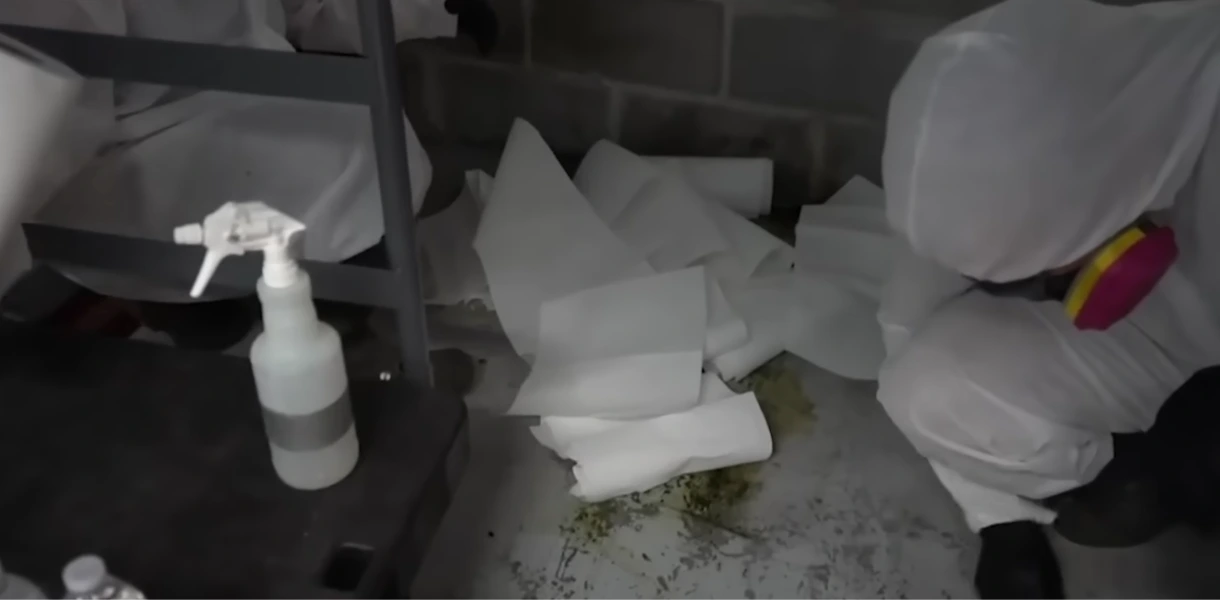
Disinfectants are significantly less effective when applied to surfaces with organic soil — dirt, grease, blood, or other biological material that can shield pathogens from contact with the disinfectant. Prior to disinfectant application, affected surfaces are cleaned to remove organic burden. This step is especially important after a contamination event involving blood or body fluids, and in hoarding or high-debris environments where soil load is elevated.
Pathogen-Specific Disinfectant Application
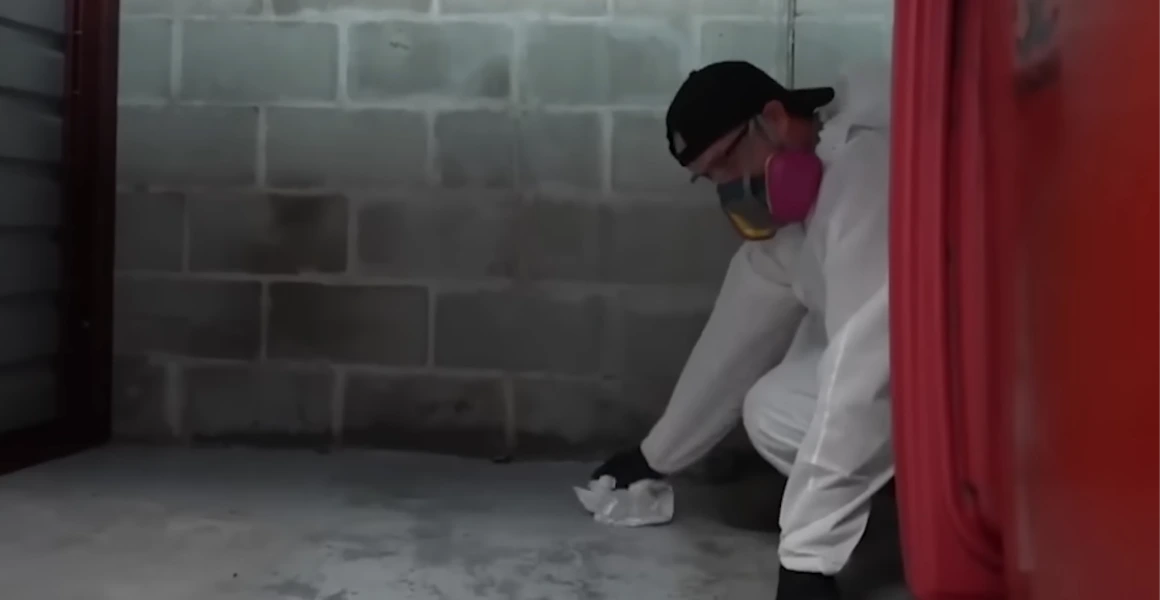
Hospital-grade, EPA-registered disinfectants matched to the target pathogen are applied to all identified surfaces. Application is performed using electrostatic sprayers or other equipment providing complete surface coverage — including undersides, crevices, and vertically oriented surfaces that manual application misses. For C. diff situations, sporicidal sodium hypochlorite solutions at appropriate concentrations are applied. For MRSA and bacterial situations, EPA-registered bactericidal agents with demonstrated MRSA efficacy are used. Dwell time is tracked from application.
Dwell Time and Surface Treatment
Dwell time — the period the disinfectant must remain wet on the surface — is the period during which pathogen kill occurs. We track dwell time from application and do not wipe or disturb surfaces until the labeled dwell time has elapsed. After dwell time, surfaces are wiped according to the product protocol. This step is where the difference between professional disinfection and amateur application is most consequential: inadequate dwell time can leave pathogens viable even when the right disinfectant was used.
Documentation and Reentry Clearance
Upon completion, we provide written documentation of the disinfection performed — scope of work, disinfectant used (product name and EPA registration number), pathogen target, application method, and dwell time achieved. This documentation is suitable for regulatory compliance, liability protection, insurance, public health reporting, and communication with employees, residents, or parents as appropriate. We confirm safe reentry timing based on the disinfectant used and the facility's ventilation.
Infectious Disease Disinfection in San Jose — The Local Picture
San Jose and Santa Clara County have the public health infrastructure of a major metropolitan area — but also the density, housing challenges, and population diversity that drive infectious disease transmission risk. The Santa Clara County Public Health Department has tracked elevated TB rates compared to California averages, driven by San Jose's immigrant communities from high-TB-burden countries. MRSA and drug-resistant organism prevalence in community settings is a nationwide concern that San Jose's dense residential neighborhoods and shared facilities are not immune to.
San Jose's large and active senior care sector — hundreds of assisted living facilities, memory care communities, and board-and-care homes serving the region's growing older population — represents the facility type most severely impacted by infectious disease outbreaks. C. diff and norovirus outbreaks in senior care settings can be life-threatening for frail residents. Facility operators contact us following outbreak situations needing documented professional disinfection that meets the expectation of both residents' families and regulatory inspectors.
San Jose's schools — San Jose Unified, East Side Union, Alum Rock, and dozens of private and charter schools — face recurring MRSA and norovirus situations in shared athletic and classroom spaces. The documentation we provide after professional disinfection supports community communication, helps reassure parents, and supports liability protection for school administrators making decisions about facility use following a confirmed case.
San Jose's tech sector workplace culture — high-density open offices, shared kitchen areas, and the expectation of rapid return to normal operations — creates a consistent demand for rapid, well-documented disinfection following a workplace exposure event. We respond quickly and provide documentation suitable for HR and legal records, as well as internal employee communications confirming the facility has been professionally treated.
Infectious Disease Disinfection FAQs
What is the difference between cleaning, disinfection, and sterilization?
Cleaning physically removes dirt and reduces pathogens but does not reliably eliminate them. Disinfection uses chemical agents to inactivate pathogens on surfaces to a level considered safe for most purposes — the target kill rate depends on the pathogen and the disinfectant's EPA registration. Sterilization eliminates all microbial life including spores and is primarily for medical device reprocessing. For environmental decontamination of residential and commercial spaces following an infectious disease exposure, disinfection to appropriate pathogen-specific standards is the correct goal.
What pathogens can professional disinfection eliminate?
Professional disinfection using hospital-grade, EPA-registered products can inactivate MRSA and other drug-resistant bacteria, C. difficile (with sporicidal agents), norovirus, influenza, COVID-19 (SARS-CoV-2), hepatitis B and C, tuberculosis, and many others. The specific agent must be matched to the target pathogen — C. diff spores require different agents than enveloped viruses like influenza. We select the appropriate agent for the confirmed or suspected pathogen.
How long does infectious disease disinfection take?
Duration depends on the size of the space and scope of treatment. A single room may be completed in 1–2 hours. A multi-room residence or small commercial space typically takes a few hours to a half day. Large commercial facilities, schools, or healthcare settings are assessed individually for scope and time. We provide an estimate after reviewing the space.
When should a business call for professional infectious disease disinfection?
Professional disinfection is warranted when: a confirmed case of a serious infectious disease (MRSA, C. diff, norovirus outbreak, TB) occurred in the space; a person with an active infection had prolonged contact with high-touch surfaces; there is an outbreak involving multiple people; regulatory or liability requirements call for documented professional treatment; or standard cleaning has not controlled ongoing transmission. When in doubt, call — the cost of professional disinfection is typically far less than the cost of an outbreak or regulatory action.
Is the space safe to reoccupy after disinfection?
Yes, after appropriate reentry time following treatment. Hospital-grade disinfectants require specific dwell times on surfaces to achieve full pathogen inactivation. After dwell time, treated surfaces are wiped or allowed to air dry. Reentry time depends on the disinfectant used and the space's ventilation. We provide specific reentry guidance for every job, and the documentation we leave behind confirms the disinfection was completed correctly.
Documented. Pathogen-Specific. Done Right.
Infectious disease disinfection requires the right agent, the right application, and documented dwell time. We coordinate professional treatment for San Jose homes, workplaces, schools, and facilities — with written documentation confirming the work meets professional standards.
HavenSafe Bio-Restoration coordinates disinfection through a network of licensed, vetted remediation professionals. We are an independent referral service.