
Unattended Death Cleanup
San Jose, CA
When a person is not discovered for days or longer, the cleanup required is significantly more complex than a standard biohazard response. HavenSafe Bio-Restoration coordinates experienced, certified technicians across San Jose who handle the full scope — biological fluids, decomposition residue, structural contamination, and persistent odor — with thoroughness and discretion.
HavenSafe Bio-Restoration is an independent referral and coordination service. Cleanup work is performed by licensed, vetted technicians in our professional network.
Why Unattended Death Cleanup Is Different From Other Biohazard Work
An unattended death — also called an undiscovered or delayed discovery death — occurs when a person passes away and is not found for a period of hours, days, or longer. In San Jose's aging population and in neighborhoods with more isolated living arrangements, this scenario occurs more frequently than many people realize. The Santa Clara County Medical Examiner-Coroner's Office responds to dozens of these cases each year.
What makes this type of cleanup fundamentally different from other biohazard work is the interaction of time, biology, and environment. Human decomposition produces biological fluids — the result of cellular breakdown — that migrate rapidly through floors, walls, and furniture. San Jose's Mediterranean climate plays a significant role: during the summer months, interior temperatures in homes without air conditioning can accelerate decomposition considerably, increasing both the volume of biological material and the degree of structural penetration within a matter of days.
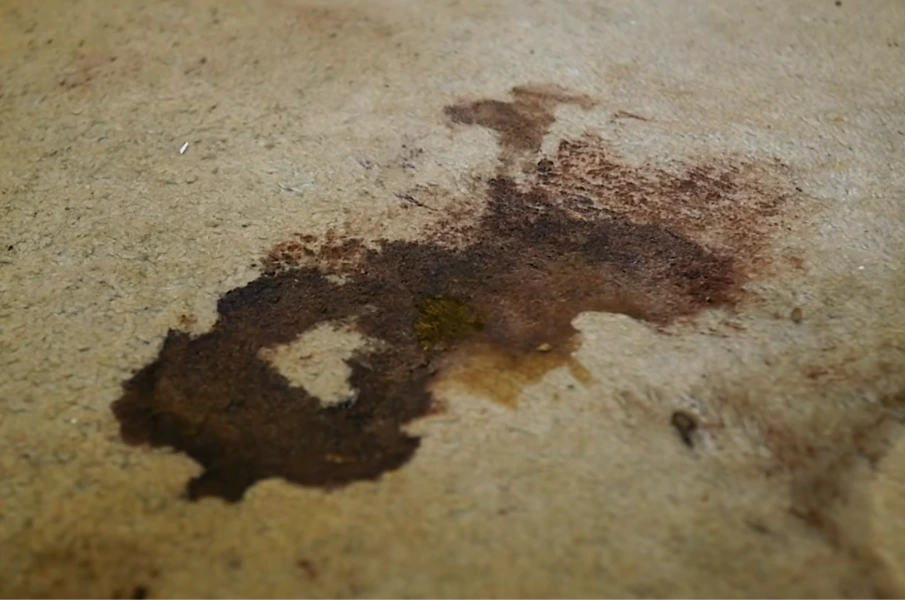
The result is a contamination footprint that is often five to ten times larger than what is visually apparent when the scene is discovered. Blood and biological fluids that have soaked through carpet padding can saturate a wooden subfloor and begin to affect the structural members below. In older homes — the craftsman bungalows of Willow Glen, the mid-century ranches of Almaden Valley — this means pier-and-beam foundations and unsealed wood surfaces that absorb extensively.
How Time Affects Scene Complexity
Every unattended death scene is different. These general tiers help explain how the interval since death shapes the remediation scope and cost.
Hours to 1–2 Days
Biological fluids are primarily contained at or near the surface. Structural penetration is limited. Porous surface materials — carpet, bedding, upholstery — will typically require removal, but subfloor and wall cavity involvement is less common. Odor is present but has not fully saturated the structure. Remediation is usually completable in a single day.
Several Days to One Week
Biological fluids have had time to migrate through carpet padding into the subfloor and may have entered wall cavities at floor-level. Decomposition is active. Odor has saturated porous materials throughout the room and may have spread to adjacent areas through HVAC systems. Structural remediation is likely. Work typically requires 1–2 full days.
Weeks or Longer
Extensive structural contamination is expected — subfloor removal, wall cavity assessment, possible joist inspection. Odor has deeply saturated the structure. Pest activity (flies, insects) may be present. Remediating these scenes requires a systematic deconstruction-and-rebuild approach and may take 2–4 days or more. Full odor treatment is always required.
These are general indicators. The only way to accurately scope an unattended death scene is an on-site assessment with testing equipment. We provide a written estimate before any work begins.
Our Unattended Death Cleanup Process
Scene Assessment and Contamination Mapping
Using UV fluorescence, moisture meters, and ATP testing, we map the full extent of biological contamination — including sub-surface and structural areas. This is the step that most property owners find surprising: the actual contamination footprint is almost always larger than the visible affected area. We document everything and give you a written scope and cost estimate before any work begins.
Systematic Removal of Contaminated Material
We remove all porous and semi-porous materials that have absorbed biological content — carpet, padding, affected sections of flooring, drywall, insulation, furniture. Where structural penetration has occurred, we open floors and walls to the degree necessary to reach clean, uncontaminated material. All removed materials are classified, packaged, and disposed of as regulated medical waste under California Health and Safety Code §118600.
Surface Decontamination
All exposed structural surfaces — concrete, wood framing, metal — are cleaned and treated with hospital-grade EPA-registered disinfectants rated against bloodborne pathogens. We follow strict dwell-time requirements and document every product and application. Decontamination continues until ATP testing confirms surfaces are within safe clearance thresholds.
Odor Neutralization
Once the biological source has been removed, residual odor compounds embedded in remaining structural materials are treated with ozone generation, hydroxyl radical treatment, or thermal fogging — depending on the extent of saturation and the characteristics of the space. Masking agents and air fresheners do not work on decomposition odor. Source removal followed by molecular treatment is the only method that produces lasting results.
Clearance Testing and Full Documentation
Post-remediation ATP testing and a final visual inspection confirm the scene has been fully remediated. You receive a written report with photographs, materials documentation, disposal manifests, and test results — suitable for insurance claims, estate purposes, property management records, or future real estate disclosure requirements.
Odor After an Unattended Death — What Actually Works
The odor from a decomposition scene is one of the most persistent and psychologically distressing aspects of an unattended death for families and property owners. Many people ask whether the smell can be fully eliminated — and the honest answer is yes, in virtually all cases, but only if it is addressed correctly.
The compounds responsible for decomposition odor — primarily putrescine, cadaverine, hydrogen sulfide, and ammonia — are volatile organic compounds (VOCs) that absorb into every porous surface in the affected space. In an unattended death scenario, this includes not just the immediate area but flooring throughout the room, wall surfaces, ceiling materials, and HVAC ducting if the system was running during the interval.
What Does Not Work
Painting over affected walls, applying bleach or commercial odor sprays, using plug-in air fresheners, or simply ventilating the space does not eliminate decomposition odor. These approaches mask the smell temporarily but do not break down the chemical compounds causing it. Within days, the odor returns. The only effective approach is to first remove all contaminated material (the source of odor production), and then treat residual molecular compounds embedded in remaining structural surfaces.
What We Use
Depending on the extent of saturation, we use ozone generation (highly effective in unoccupied spaces — ozone must be evacuated before re-occupancy), hydroxyl radical treatment (can operate with occupants present in adjacent spaces), or thermal fogging with odor-counteractant compounds that penetrate the same surfaces the odor compounds have saturated. For severe cases, a combination approach is used.
For detailed information on odor remediation methods, see our odor removal service page.
For Landlords and Property Managers in San Jose
Unattended deaths in rental properties are a reality of property management — particularly in San Jose's large inventory of multi-family housing, senior-occupied units, and single-room-occupancy facilities. When one of your tenants passes away undiscovered, you face a convergence of legal obligations, insurance requirements, and a compressed timeline to restore the unit to habitable condition.
Under California Civil Code, a landlord has a legal obligation to maintain rental properties in habitable condition. A unit with active biohazard contamination is uninhabitable by definition. Depending on how long the unit remains unremediatd, you may also face odor migration into adjacent units — a problem that creates tenant complaints, potential liability, and secondary remediation costs.
We work directly with property managers and building owners throughout the San Jose market. Here is what we bring to these situations:
- Rapid mobilization: We can typically begin assessment within hours of your call and schedule remediation immediately after the scene is released by law enforcement and the coroner's office.
- Insurance coordination: We document the scene thoroughly and can communicate directly with your insurer's adjuster to expedite the claims process.
- Discreet operations: We understand the sensitivity of working in an occupied multi-unit building. We stage work to minimize disruption to other residents and arrive without marked vehicles or branded signage.
- Written clearance documentation: Our post-remediation report provides the written evidence you need that the unit has been professionally remediated — important for your records and for future tenant disclosure obligations under California law.
- Estate coordination: We are experienced working alongside estate attorneys and next-of-kin representatives when property access, belongings, and payment responsibility must be coordinated across multiple parties.
San Jose's neighborhoods each present different logistics. In the dense apartment corridors of Berryessa and East San Jose, we coordinate with building management to stage equipment, secure freight elevator access, and schedule work during hours that minimize impact on neighbors. In the single-family rental stock of Evergreen or Almaden Valley, the focus is speed and discretion on a residential street.
Unattended Death Cleanup FAQs
What happens to a home after an unattended death?
Biological fluids produced during decomposition migrate through porous surfaces — carpet, wood flooring, drywall, insulation — often penetrating well below visible surfaces. Decomposition gases saturate the structure. The longer the interval between death and discovery, the deeper and broader the contamination. San Jose's warm climate significantly accelerates this process during summer months. By the time most scenes are discovered, the contamination footprint is substantially larger than what is visible.
Can the odor from an unattended death ever be fully eliminated?
Yes — in virtually all cases, but only through proper professional remediation. The process has two required steps: first, all contaminated material (the source of odor production) must be physically removed. Second, residual odor compounds embedded in remaining structural surfaces are treated with ozone generation or thermal fogging. Painting over walls, applying bleach, or using air fresheners does not work — these mask the smell temporarily but the odor returns. Source removal followed by molecular treatment is the only method that produces lasting results.
Does homeowners insurance cover unattended death cleanup?
Many California homeowners policies cover biohazard remediation after a death on the property — including unattended deaths. Check your policy's property damage or additional coverage provisions and call your insurer before authorizing work. We provide a comprehensive documentation package — photographs, written remediation report, itemized materials and labor, disposal manifests — that gives your adjuster exactly what is needed to process the claim. Many property owners pay significantly less than the full cost once insurance is applied.
Who is responsible for cleanup when the deceased was a tenant?
Under California law, the landlord is generally responsible for restoring a rental unit to habitable condition, including biohazard remediation after a death. Depending on the lease terms, the estate of the deceased tenant may bear some responsibility for costs above normal wear and tear. We regularly work with property managers, estate attorneys, and next-of-kin representatives to coordinate access, documentation, and cleanup when multiple parties are involved.
How long does unattended death cleanup take?
It depends on the interval since death and the extent of biological migration. Scenes with a shorter discovery interval may be remediable in a single day. Those with extended decomposition — several days or more — typically require 1–3 days, and those with deep structural involvement may require additional time. We provide a realistic written timeline estimate after the on-site assessment, before any work is authorized.
Call Anytime — We Handle the Hard Part
Unattended death scenes are among the most complex biohazard situations we face. We have the experience, the equipment, and the training to restore your property completely.
HavenSafe Bio-Restoration coordinates cleanup through a network of licensed, vetted remediation professionals. We are an independent referral service.