
Hoarding Cleanup
San Jose, CA
Hoarding situations involve real people dealing with real challenges — and they deserve to be handled with respect. HavenSafe Bio-Restoration coordinates experienced technicians across San Jose who approach hoarding cleanup without judgment, moving efficiently through the biohazard remediation work while remaining sensitive to everyone involved.
HavenSafe Bio-Restoration is an independent referral and coordination service. Cleanup work is performed by licensed, vetted technicians in our professional network.
Hoarding Disorder and What Professional Cleanup Actually Involves
Hoarding disorder is a recognized mental health condition in which a person has persistent difficulty discarding possessions, resulting in accumulated clutter that compromises the living space. It affects an estimated 2–6% of the population and is associated with significant distress for both the person who hoards and their family members.
From a professional cleanup standpoint, the challenge is not the volume of possessions alone — it is the biohazard conditions that frequently develop within hoarding situations over time. As pathways narrow and rooms fill, normal household maintenance becomes impossible. Human and animal waste accumulates and saturates flooring and walls. Rodents, cockroaches, and other pests are drawn to the conditions and establish infestations that add their own contamination layer. Mold grows where moisture is trapped under accumulated items. Food and organic material decomposes. The cumulative result is a property that presents multiple biohazard categories simultaneously.
This combination of conditions is why hoarding cleanup requires professional biohazard remediation — not simply a junk removal company, a cleaning service, or family volunteers willing to work. The contamination must be properly assessed, biological materials handled and disposed of under California Health and Safety Code §118600, structural surfaces decontaminated with hospital-grade disinfectants in compliance with CalOSHA §5193, and odor eliminated through molecular treatment rather than masking. The scope of work looks very different from one property to the next, which is why a thorough on-site assessment is always the starting point.
Biohazard Conditions Found in Hoarding Situations
Most hoarding situations involve a combination of these conditions. Understanding each helps explain why professional remediation is required.
Human Waste Contamination
When bathroom access is blocked or plumbing fails, human feces and urine accumulate on floors and surfaces. These fluids penetrate deeply into carpet, wood, and concrete and cannot be safely or completely addressed with standard cleaning products. Human waste carries pathogens including E. coli, Salmonella, and hepatitis A.
Animal Waste and Animal Remains
Hoarding situations frequently involve large numbers of companion animals. Animal feces and urine, when present in large volumes over long periods, saturate structural materials and produce ammonia odor that cannot be neutralized without structural remediation. Deceased animals may also be present and require removal as biohazardous material.
Rodent and Insect Infestation
Mice, rats, and cockroaches thrive in hoarding environments. Their feces, urine, and nesting materials are biohazardous — rodent droppings can carry hantavirus, leptospirosis, and salmonella. Infestation residue must be carefully removed and surfaces decontaminated before any structural work or reoccupation is safe.
Mold Growth
Accumulated items trap moisture against floors and walls, creating ideal conditions for mold colonization. In San Jose's older housing stock — common in neighborhoods like Willow Glen — this moisture is absorbed into wood framing and plaster. Mold requires identification, containment, and professional remediation separate from the general biohazard cleanup.
Decomposing Organic Material
Rotting food, spoiled perishables, and other organic material generates pathogens and potent odor compounds. In advanced situations, this material has liquefied and soaked into flooring. Its removal requires the same pathogen-safe handling protocols as other biological waste.
Structural Damage
The combined weight of accumulated possessions, moisture intrusion, and biological contamination can cause significant structural damage — compromised subfloor, deteriorated wall assemblies, weakened joists. A structural assessment is part of every hoarding cleanup we coordinate, to identify what needs replacement before restoration begins.
Our Hoarding Cleanup Process
On-Site Assessment — Before Any Work Begins
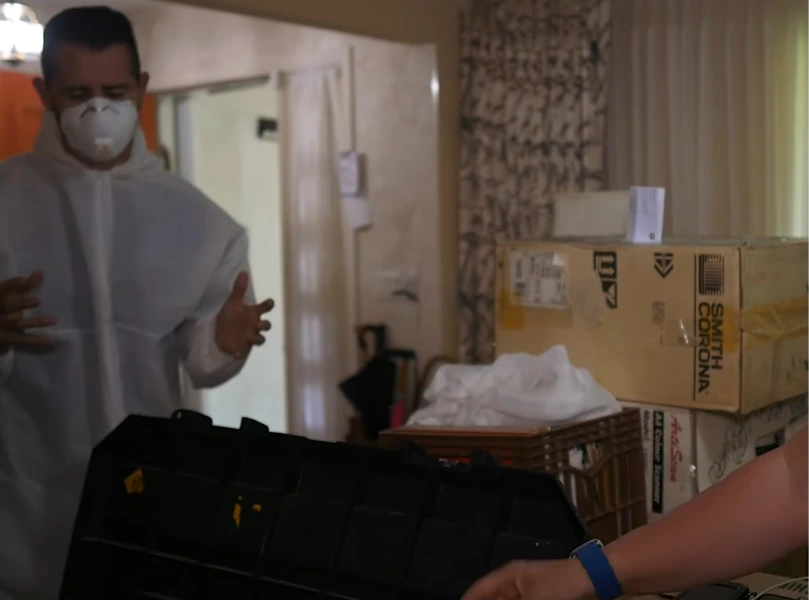
Every hoarding cleanup begins with an in-person walk-through. We assess the volume and type of content, identify all biohazard categories present, and evaluate structural integrity. We use moisture meters and ATP testing to map contamination depth. We discuss the scope honestly with you — including what is involved in restoring each area — and provide a written estimate before any work is authorized.
Content Sorting and Removal
We work room by room, sorting items into categories: items to retain (coordinated with the occupant or family), items for donation or disposal, and biohazardous materials for regulated disposal. We do not simply discard everything — if the occupant is involved, we move at a pace that respects their participation while maintaining the efficiency the cleanup requires. All biohazardous materials are packaged and disposed of under California Health and Safety Code §118600.
Structural Material Removal
Once content is cleared, the full extent of structural contamination becomes visible. Saturated carpet, padding, flooring, drywall, and insulation are removed to expose the structural surfaces beneath. In severe hoarding situations, subfloor removal and wall cavity inspection are routine. We document every material removed and its condition.
Pest Infestation Remediation
We work with licensed pest control professionals to address active infestations before or during the cleanup process. Rodent droppings and nesting material are carefully collected and disposed of using HEPA-filter equipment — disturbing rodent droppings without proper respiratory protection risks hantavirus exposure. We do not leave this step incomplete.
Surface Decontamination and Mold Treatment
All exposed structural surfaces are HEPA-vacuumed, cleaned, and treated with hospital-grade EPA-registered disinfectants in compliance with CalOSHA §5193. Where mold is identified, we apply appropriate antifungal treatment and, if mold growth is extensive, coordinate professional mold remediation. Post-treatment ATP testing confirms surfaces have reached clearance thresholds.
Odor Treatment and Clearance
Hoarding situations typically involve deeply embedded odors from multiple sources — human and animal waste, mold, decomposing organics. After all contaminated material has been removed and surfaces decontaminated, we treat residual odor compounds with ozone generation or thermal fogging. The result is permanent odor elimination, not temporary masking. A written clearance report concludes the work.
Who We Work With — Families, Landlords, Social Services, and Estate Situations
Hoarding cleanup in San Jose is rarely a simple transaction between a homeowner and a service provider. The situations that require professional cleanup typically involve multiple people, competing concerns, and sometimes active coordination with government agencies or the legal system. Here is how we work across these different scenarios.
Family Members Calling on Behalf of a Loved One
Many calls we receive come from adult children, siblings, or other relatives — often after years of watching a situation deteriorate and finally reaching a point where action is necessary. The family member calling is often processing grief, guilt, and exhaustion simultaneously. We take these calls with seriousness. We help you understand what the cleanup involves, what it will cost, and what the realistic timeline is. We also know when to slow down and ask what the person themselves has been told about the cleanup — because how that is handled matters.
Landlords and Property Managers
San Jose landlords who discover a tenanted property in a severe hoarding condition face a compressed set of legal obligations. Under California Civil Code, the landlord must restore the unit to habitable condition. The contamination must be fully remediated before the unit can be re-rented. We coordinate with property managers and their insurance carriers to document conditions thoroughly — photographs, written assessment, materials log — supporting both the insurance claim and any legal proceedings related to the tenancy.
Estate Situations
When a person who hoarded has passed away and an executor or family member must handle the property, the cleanup often needs to happen under real estate or probate timelines. We understand those constraints and work with estate attorneys and real estate agents to schedule and complete work efficiently.
Adult Protective Services and Code Enforcement
San Jose's City Code Enforcement and Santa Clara County Adult Protective Services sometimes refer cases to professional cleanup services — either as part of a voluntary compliance agreement or following an inspection order. We coordinate our work with these processes, providing the documentation that agencies require to confirm habitable conditions have been restored.
Hoarding Cleanup in San Jose — What We See in This Market
San Jose's housing market presents specific conditions that influence how hoarding situations develop and what cleanup involves. The Bay Area's high cost of housing creates intense pressure on longtime residents — particularly seniors — to remain in properties even as conditions deteriorate around them. San Jose has a significant population of seniors living alone, often in homes they have occupied for decades, where declining physical or cognitive capacity has made it impossible to maintain the space.
Neighborhoods like Evergreen and Almaden Valley, with their larger single-family homes and significant senior populations, see a disproportionate number of these situations. The same is true in older rental stock throughout Berryessa and East San Jose, where hoarding in a multi-unit building affects neighbors, building management, and the property's overall habitability.
In San Jose's older housing stock — 1950s through 1970s construction — the structural consequences of hoarding are often more severe than in newer homes. Older subfloor systems absorb waste more readily. Plaster walls hold odor compounds more deeply than modern drywall. Crawl space foundations mean that contamination from above can reach soil below. We factor all of this into how we scope and price hoarding cleanup work in this market.
Hoarding Cleanup FAQs
What biohazards are typically found in hoarding situations?
The most common biohazard conditions in hoarding situations are human and animal feces and urine soaked into flooring and structural materials, rodent and cockroach infestation residue, mold growth from trapped moisture, and decomposing food and organic material. Severe situations may also involve deceased animals or, in extreme cases, deceased human remains. Each of these categories requires professional biohazard remediation — standard cleaning is neither safe nor sufficient.
How do you handle cleanup when the person still lives in the home?
We coordinate with the occupant, their family, and any support services involved. Our technicians are trained to work respectfully and without judgment. When the person is participating in the cleanup, we involve them in decisions about their possessions and work at a pace that keeps everyone informed. We understand this is often a sensitive situation involving a mental health condition, not a simple cleaning job.
Does insurance cover hoarding cleanup?
Coverage varies significantly by policy. Some California homeowners insurance policies cover biohazard remediation when conditions constitute a health hazard. Landlord policies often cover damage caused by tenants, including hoarding-related contamination. We provide thorough documentation — written assessment, photographs, materials log, and disposal manifests — to support any insurance claim. We recommend contacting your insurer before authorizing work.
Can a property be fully restored after severe hoarding?
Yes, in the vast majority of cases. After full biohazard remediation — content removal, biological material removal, structural surface decontamination, pest infestation remediation, and odor treatment — structural restoration can proceed. Subfloor replacement, drywall repair, new flooring, and paint return the property to a safe, habitable condition. We can coordinate with licensed contractors for restoration work following our remediation phase.
How long does hoarding cleanup take?
It depends on the size of the property and the severity of conditions. A single room with limited biohazard involvement might be addressed in one day. A whole-house severe hoarding situation with structural contamination, pest infestation, and multiple biohazard categories typically requires several days to a week. We provide a written timeline estimate after the on-site assessment, so you have a realistic expectation before work begins.
Ready to Help — Without Judgment
Hoarding cleanup is complicated work that requires both technical expertise and genuine human sensitivity. Call us and we will walk you through what is involved — honestly and without pressure.
HavenSafe Bio-Restoration coordinates cleanup through a network of licensed, vetted remediation professionals. We are an independent referral service.