
Homeless Encampment Cleanup
San Jose, CA
Encampment sites in San Jose present a consistent set of biohazard conditions — human waste, sharps, abandoned materials, and structural contamination — that require certified professional remediation. HavenSafe Bio-Restoration coordinates experienced technicians who handle these sites completely, correctly, and with dignity for everyone involved.
HavenSafe Bio-Restoration is an independent referral and coordination service. Cleanup work is performed by licensed, vetted technicians in our professional network.
Encampment Cleanup in San Jose — Understanding the Scale and the Work
San Jose has one of the largest unhoused populations of any U.S. city, with encampments concentrated along Coyote Creek, the Guadalupe River corridor, Highway 101 underpasses, Kelley Park, and throughout the downtown core. The city has worked to manage these sites through its Homelessness Response Team and coordinated outreach programs, but the volume of encampment remediation needed — across public and private property — consistently exceeds what public resources can address.
For private property owners, HOAs, commercial landlords, and business operators, an encampment on or adjacent to your property creates immediate practical problems: public health hazards, liability exposure, property damage, and community impact. When the site has been vacated — whether through voluntary relocation, outreach services, or enforcement action — the cleanup responsibility falls to the property owner.
That cleanup is not standard grounds maintenance or janitorial work. Encampment sites routinely contain human waste, discarded syringes and other sharps, blood-stained materials, drug paraphernalia, and abandoned items that cannot be safely handled without proper personal protective equipment and training. The same CalOSHA §5193 standards that govern crime scene and trauma cleanup apply here — because the biohazard risks are equivalent.
What Professional Encampment Cleanup Actually Involves
Every encampment site is different in scale, but most contain the same categories of material — each requiring a specific handling protocol.
Human Waste and Fecal Contamination
Without sanitation access, encampment sites accumulate significant human waste — feces and urine deposited on soil, concrete, vegetation, and structures. This contamination carries the full pathogen profile of human waste: hepatitis A, E. coli, Salmonella, and other enteric pathogens. Surface decontamination of all impacted areas is required, with soil removal where contamination has saturated ground-level material.
Sharps and Needle Disposal
Discarded syringes and needles are among the most acute hazard at encampment sites. Contaminated sharps carry bloodborne pathogen risk — HIV, hepatitis B, hepatitis C — and cause needlestick injuries to anyone who handles them without specialized equipment. All sharps are collected with mechanical pickup tools, placed in puncture-resistant containers, and transported to a licensed medical waste treatment facility under California Health and Safety Code §118600.
Blood-Stained and Bodily Fluid-Contaminated Materials
Clothing, bedding, tarps, and other materials contaminated with blood or other potentially infectious materials (OPIM) are classified as biohazardous waste under CalOSHA §5193 and must be disposed of accordingly. These cannot be placed in ordinary trash. All biohazardous materials are bagged in red regulated waste bags and transported to a licensed facility for destruction.
Drug Paraphernalia
Drug paraphernalia — pipes, spoons, tourniquets, drug residue containers — requires careful handling and appropriate disposal as potentially contaminated material. Residue in containers may carry bloodborne pathogen risk; all items are handled with the same precautions as other contaminated materials on the site.
Abandoned Property and General Debris
Encampment sites typically contain large volumes of abandoned personal property alongside biohazardous materials: tents, tarps, sleeping bags, clothing, food containers, furniture, and miscellaneous items. Under California law, there are procedural requirements governing the disposal of personal property at some encampment sites. We work with property owners to follow the appropriate process and document what was removed.
Structural and Surface Contamination
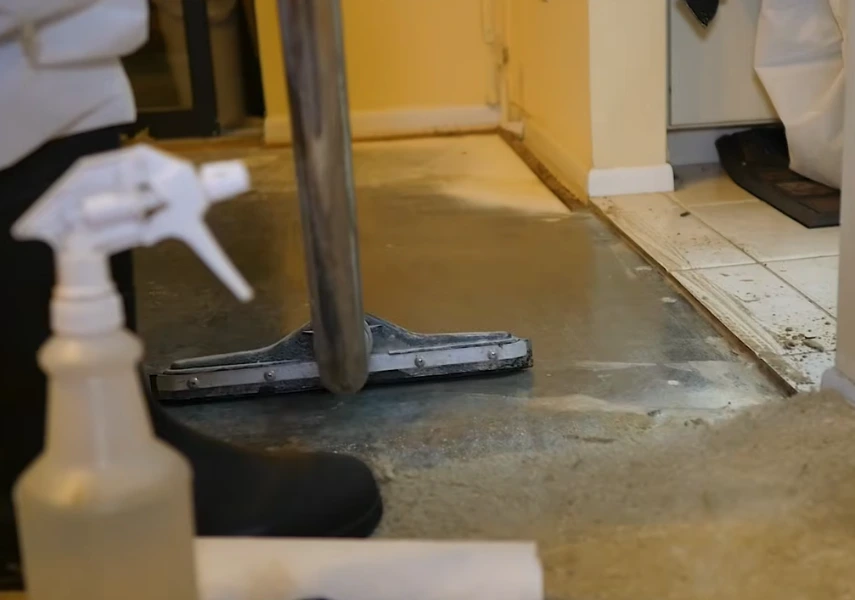
When an encampment has occupied a structure — a parking garage, underpass, outbuilding, storage area — surfaces may be contaminated with human waste, blood, or other biological materials. These surfaces require the same professional decontamination protocol as any other biohazard scene: hospital-grade EPA-registered disinfectants, treatment verified by ATP testing, and documentation of clearance.
Our Encampment Cleanup Process
Site Assessment and Scope Development
We walk the site before any work begins to assess its size, biohazard conditions present, structural contamination, volume of material to be removed, and any access constraints. We review California personal property requirements with you and confirm the site has been appropriately cleared before work is authorized. You receive a written scope and cost estimate before we begin.
Sharps Survey and Collection
Before any other material is disturbed, trained technicians in full PPE perform a systematic sharps survey across the entire site, collecting all visible sharps using mechanical pickup tools and placing them in certified puncture-resistant containers. A second sweep follows to catch concealed needles in soil, vegetation, and debris. This step protects our crew and the people who will occupy the site afterward.
Biohazardous Material Removal
All blood-stained, feces or urine-contaminated, and otherwise biohazardous materials are sorted, bagged in regulated waste bags, and staged for disposal as regulated medical waste. This is handled separately from general debris removal and disposed of under California Health and Safety Code §118600 through a licensed facility. We provide a disposal manifest for every load.
General Debris Removal and Property Documentation
Non-biohazardous materials — tents, furniture, general trash — are removed and disposed of through appropriate waste channels. Where California personal property procedures apply, we document and stage retrievable items as required. All work is photographed throughout for our clients' records.
Surface and Structural Decontamination
All contaminated surfaces — concrete, asphalt, soil perimeter areas, structures, walls — are treated with hospital-grade EPA-registered disinfectants in compliance with CalOSHA §5193. For large outdoor areas, we use appropriate application equipment to ensure full surface coverage. Contaminated soil in high-concentration areas is removed and replaced. Post-treatment ATP testing confirms clearance on structural surfaces.
Site Documentation and Clearance
We provide complete post-cleanup documentation — before and after photographs, materials removed and disposed of, sharps count, treatment protocols applied, and any ATP test results for structural surfaces. This documentation supports insurance claims, regulatory compliance, and risk management for future incidents.
Who We Serve — Property Owners, HOAs, Businesses, and Municipalities
Private Property Owners
Residential and commercial property owners who discover an encampment on their land are responsible for cleanup once the site has been vacated. We handle the full scope — from initial site assessment through final clearance documentation — so the property owner does not have to manage the logistics of biohazard disposal, sharps handling, and regulatory compliance. We work quickly to minimize the duration of the hazard on your property.
Commercial Property Managers and Landlords
Shopping centers, parking facilities, industrial properties, and commercial complexes throughout San Jose experience recurring encampments along perimeter fencing, loading docks, and unmonitored areas. Many commercial property managers coordinate with us on a recurring basis — both for one-time cleanups and for rapid-response capability when situations develop. We are discreet, efficient, and generate the documentation that insurance and legal teams require.
Homeowners Associations
San Jose HOAs managing common areas, greenbelts, and creek-adjacent parcels often find themselves responsible for encampment cleanup on land where public agency resources do not apply. We work directly with HOA boards and management companies, providing clear scope and pricing and completing work with minimal disruption to residents.
Faith Organizations and Nonprofits
Churches, community centers, and nonprofit facilities in San Jose — particularly those in the downtown corridor and along major transit routes — are frequent targets for encampment formation on adjacent lots and parking areas. We understand the particular sensitivity of these situations and handle them accordingly.
Industrial and Warehouse Properties
San Jose's industrial corridors along North First Street, the Alviso area, and Berryessa see concentrated encampment activity along rail corridors and undeveloped buffers. We serve industrial property owners and managers who need reliable, documented cleanup without the burden of coordinating specialized waste disposal themselves.
California Legal Considerations for Encampment Cleanup
California law provides procedural protections for personal property at encampment sites in certain circumstances — particularly on public property. For private property owners, the requirements are distinct from public agency procedures, but there are still steps that should be followed to minimize legal risk before and during cleanup.
As a general matter, before cleanup begins, property owners should: (1) confirm the site has been fully vacated, (2) provide reasonable notice to occupants in advance of cleanup when legally required, (3) document the site thoroughly with photographs before any materials are removed, and (4) retain retrievable personal property (items that are not biohazardous, damaged beyond use, or abandoned) for a reasonable storage period.
We are not attorneys and do not provide legal advice. What we can do is walk you through the practical steps we have observed other property owners follow in San Jose, help you document the site before and during cleanup, and ensure the remediation work itself is done correctly regardless of property type. For specific legal questions about your property, we recommend consulting a California attorney or contacting the City of San Jose's Code Enforcement division for guidance on public property adjacent to yours.
Encampment Cleanup FAQs
Who is responsible for cleaning up an encampment on private property in San Jose?
In California, private property owners are generally responsible for cleanup of encampments on their own property once the site has been vacated. The City of San Jose handles cleanup on public property through its Homelessness Response Team. For private property, contacting a licensed biohazard cleanup service is the appropriate path — the cleanup must meet biohazard remediation standards for human waste and sharps, which standard cleaning services cannot provide.
How are syringes and needles handled and disposed of?
All sharps are collected using mechanical pickup tools — never bare hands or standard gloves. They are placed directly into puncture-resistant sharps containers certified to DOT transport standards. Full containers are sealed, labeled, and transported to a licensed medical waste treatment facility for destruction under California Health and Safety Code §118600. We document sharps count per site visit.
Does business or commercial property insurance cover encampment cleanup?
Coverage varies by policy. Some commercial property insurance policies include biohazard remediation coverage when cleanup is necessitated by a health hazard. We provide thorough documentation — written assessment, photographs, disposal manifests, treatment logs — to support any insurance claim. We recommend notifying your insurer before authorizing work so we can coordinate with any adjuster if requested.
What happens to personal belongings left at the encampment site?
California law provides procedural protections for personal property at certain encampment sites. We work with property owners to follow the appropriate process — which typically involves documenting and staging retrievable non-biohazardous personal items before disposal. Biohazardous items (contaminated clothing, bedding, drug paraphernalia) are disposed of as regulated waste regardless of condition. We document everything removed from the site with photographs.
Can encampment cleanup be done discreetly?
Yes. We use unmarked vehicles and plain-uniformed technicians. We coordinate scheduling to minimize foot traffic and visibility, and aim to complete sites in a single visit wherever possible. For commercial properties, we can schedule during off-hours. We understand that many of our clients — churches, businesses, residential properties — prefer that this work is handled without drawing unnecessary attention.
Complete, Documented, Done Right
Encampment cleanup handled from assessment to clearance — with proper biohazard protocols, sharps disposal, and full documentation for your records. Call us to schedule a site assessment.
HavenSafe Bio-Restoration coordinates cleanup through a network of licensed, vetted remediation professionals. We are an independent referral service.